How Is a Refrigerator Built? On-site Look at the Refrigerator Assembly Line
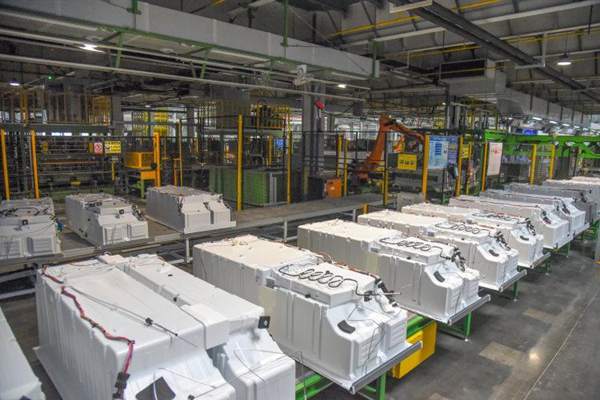
The modern refrigerator assembly line represents a convergence of thermodynamics, materials science, and high-speed automation. Unlike simple consumer goods, a refrigerator is a sealed system where thermal efficiency, structural integrity, and electrical safety must be engineered into every unit. The following breaks down the core stages of this sophisticated manufacturing process.
Structural Formation and Cabinet Marriage
The production cycle begins with the creation of the inner and outer shells. The inner liner, typically formed from HIPS (High Impact Polystyrene) or ABS, is created via vacuum forming. Heated plastic sheets are drawn into precision molds to create the shelves and crisper cavities. Simultaneously, the outer cabinet is fabricated from pre-painted steel or stainless steel panels, which are cut, bent, and welded into a rigid frame. The critical "marriage" station brings these two components together. Here, the liner is inserted into the cabinet shell, aligned with laser-guided precision to ensure a uniform gap for the insulation foam. Any misalignment at this stage creates thermal bridges that drastically reduce energy efficiency.
Foam Injection and Thermal Barrier Creation
Arguably the most vital stage is the polyurethane foam injection. The cavity between the inner liner and outer cabinet is injected with a liquid mixture of polyol and isocyanate. This chemical reaction is exothermic, causing the mixture to expand and fill every microscopic void. The process requires exact environmental control; temperature and humidity fluctuations can alter the expansion rate and the closed-cell density of the foam. Multi-axis robotic arms maneuver the mixing heads to ensure uniform distribution without creating voids or overfilling, which could warp the panels. The units then move to a curing tunnel, where the foam polymerizes and achieves its final R-value (thermal resistance).
Refrigeration Circuit Integration
The assembly of the vapor-compression cycle follows. The hermetically sealed compressor is mounted on vibration-damping brackets at the base of the unit. Precision copper tubing is then routed and connected to the condenser (heat rejection) and the evaporator (heat absorption). These joints are typically made using automated brazing systems that create hermetic seals capable of withstanding decades of thermal cycling. The capillary tube or thermal expansion valve (TXV) is cut to exact lengths; this component meters the refrigerant flow, and any deviation can lead to insufficient cooling or compressor failure.
Refrigerant Charging and Vacuum Processing
Before the system can be operational, it must be purified. The entire refrigeration circuit is connected to vacuum pump stations to remove non-condensable gases and, critically, moisture. The target vacuum is measured in microns of mercury. Residual moisture is a primary enemy of refrigeration, as it can freeze at the capillary tube causing blockages, or react with refrigerant to form corrosive acids. Once evacuated, automated charging stations dispense the exact mass of refrigerant—often R-600a isobutane in modern eco-friendly designs. Given the flammable nature of hydrocarbons, this area is equipped with gas detection sensors and explosion-proof enclosures.
Door Assembly and Seal Integrity
The door is manufactured as a separate sub-assembly where the inner door liner and outer door panel are mated and filled with foam. It is then brought to the main line for hinge installation. Torque-controlled tools ensure hinges are secured to prevent door sag. The magnetic gasket—a PVC strip with embedded ferrous powder—is installed along the perimeter. This creates an airtight seal against the steel cabinet. Machine vision systems often inspect this seal to verify uniform compression and detect any twists or gaps that would increase the door opening energy rate.
Electrical Systems and Smart Controls
Modern refrigerators are sophisticated electromechanical systems. The wiring harness is routed through the cabinet, connecting the inverter compressor, LED lighting, fan motors, and defrost heaters. The Electronic Control Unit (ECU) is installed and programmed. For units with inverter-driven compressors, calibration ensures the motor adjusts speed based on cooling load rather than simply cycling on and off. Automated electrical testing verifies continuity and insulation resistance before the unit proceeds to functional testing.
Automation and Robotic Precision
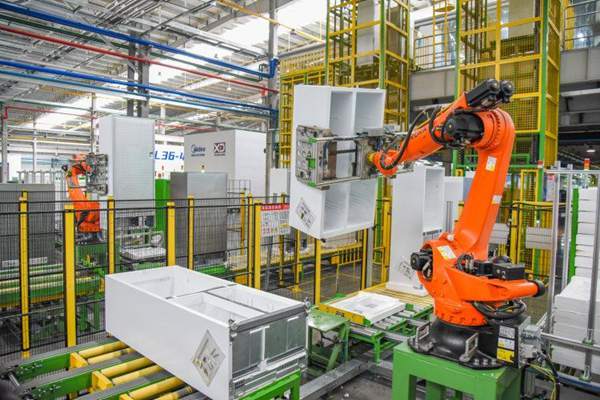
Throughout the line, six-axis articulated robots handle heavy lifting, such as moving cabinet assemblies and maneuvering doors. Collaborative robots (Cobots) are increasingly used for adhesive dispensing, screw driving, and detailed quality inspection. Equipped with machine vision, these systems can detect microscopic surface defects and verify component presence at speeds far exceeding human capability. This integration allows human operators to focus on complex troubleshooting and process optimization.
Performance Validation and EOL Testing
The final stage is rigorous End-of-Line (EOL) testing. Units are powered on and undergo a pull-down test, where temperature sensors monitor how quickly and uniformly the compartments reach their target temperatures. The defrost cycle is activated to ensure proper operation. Acoustic testing is performed to measure dB(A) ratings for noise compliance. Only after passing these tests—and receiving final serial number labeling—is the refrigerator deemed ready for packaging and shipment.