Email:yaming_best@outlook.com Telephone: + 86 137-3657-7326

How to Optimize the Toilet Assembly Line to Improve the Finished Product Yield?

How to Optimize the Toilet Assembly Line to Improve the Finished Product Yield?

2026-07-04

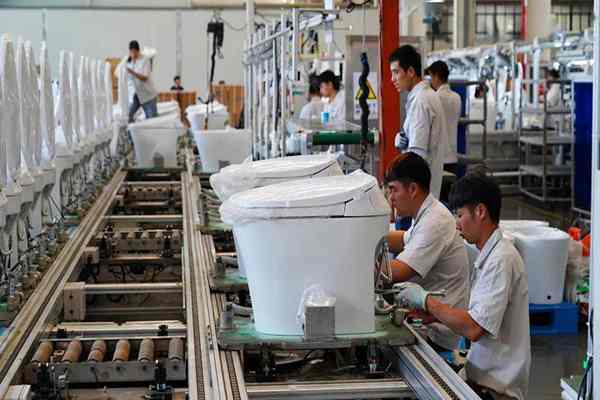
Smart Toilet Assembly Line: A Technical Overview of Modern Manufacturing 1. Overall Layout and Design Philosophy The image reveals a linear continuous‑flow assembly line purpose‑built for smart toilet production. The system is structured around a modular roller‑conveyor backbone that links individual assembly stations into an integrated whole. The line follows the one‑piece flow​ manufacturing principle—each unit moves sequentially between stations, eliminating the work‑in‑process (WIP) accumulation common in traditional batch production. The line features a symmetrical station arrangement on both sides of the conveyor, with operators positioned to face the line for optimal reach and minimal movement. This layout maximizes spatial efficiency while adhering to ergonomic standards. As visible in the image, ample buffer zones and tool racks are positioned within immediate reach of each station, enabling operators to complete material retrieval, assembly, and inspection without unnecessary motion. 2. Conveyor System: The Arterial Core At the heart of this line is an accumulating roller conveyor system. Close inspection shows track sections constructed from standardized aluminum extrusion profiles housing powered roller assemblies. The rollers feature wear‑resistant rubber coatings that provide consistent friction...
Automated door lock assembly line increases your production capacity by 300%

Automated door lock assembly line increases your production capacity by 300%

2026-05-24

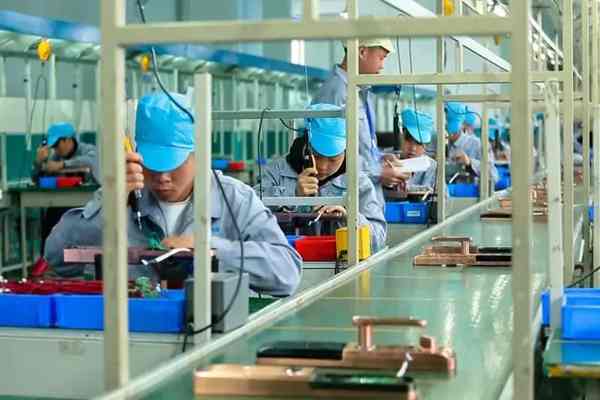
The image captures a door lock assembly line built around meticulous manual operations. Workers in uniform light-gray coveralls and blue anti-static caps focus intently within individually partitioned workstations. The line runs on a pale green anti-static conveyor belt, with copper-toned metal lock bodies arranged in orderly sequence along the track. The scene conveys a distinctive atmosphere—somewhere between laboratory rigor and factory rhythm—that reflects the dual pressures of millimeter-grade precision requirements and mass-production efficiency inherent to lock manufacturing. Error-Proofing Through Spatial Design The physical layout of a lock assembly line prioritizes foreign-object control and electrostatic discharge prevention. The transparent acrylic dividers visible in the image serve as more than simple partitions; they form physical error-proofing barriers. The tiny pins, springs, and cams inside a lock cylinder are extremely sensitive to dust, and these dividers effectively isolate operational debris between adjacent stations. Their transparent nature also allows line supervisors to conduct unobstructed visual patrols of the entire line, catching procedural anomalies in real time. Work surfaces are covered with green anti-static matting, with grounding systems ensuring PCB boards in electronic locks are...