
How to Optimize the Toilet Assembly Line to Improve the Finished Product Yield?
Smart Toilet Assembly Line: A Technical Overview of Modern Manufacturing
1. Overall Layout and Design Philosophy
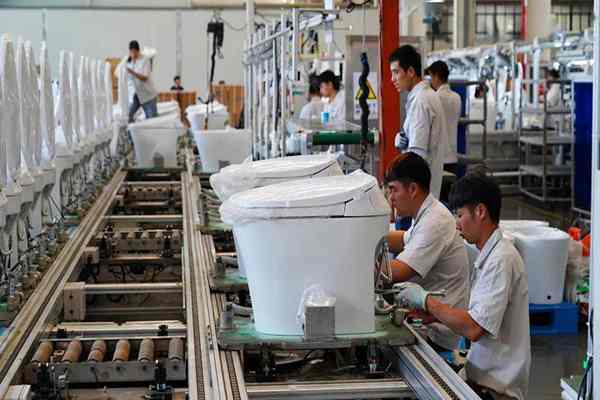
The image reveals a linear continuous‑flow assembly line purpose‑built for smart toilet production. The system is structured around a modular roller‑conveyor backbone that links individual assembly stations into an integrated whole. The line follows the one‑piece flow manufacturing principle—each unit moves sequentially between stations, eliminating the work‑in‑process (WIP) accumulation common in traditional batch production.
The line features a symmetrical station arrangement on both sides of the conveyor, with operators positioned to face the line for optimal reach and minimal movement. This layout maximizes spatial efficiency while adhering to ergonomic standards. As visible in the image, ample buffer zones and tool racks are positioned within immediate reach of each station, enabling operators to complete material retrieval, assembly, and inspection without unnecessary motion.
2. Conveyor System: The Arterial Core
At the heart of this line is an accumulating roller conveyor system. Close inspection shows track sections constructed from standardized aluminum extrusion profiles housing powered roller assemblies. The rollers feature wear‑resistant rubber coatings that provide consistent friction for driving product pallets while protecting ceramic toilet surfaces from scratches or chips.
The conveyor incorporates zone‑speed control and station‑specific stop‑start functionality. At each assembly station, stop gates and sensor arrays work in tandem: when a pallet reaches the work position, a stop gate automatically rises to secure it; the operator releases the unit via foot pedal or push button upon completion, and the pallet advances to the next station. This “stop‑and‑go” transfer mode maintains assembly stability while preserving overall line takt time.
Notably, all toilets rest on dedicated fixture pallets engineered to match the base contour of the product. These pallets incorporate locating pins and clamping mechanisms to prevent displacement or tipping during transfer. Each pallet carries an embedded RFID chip or barcode carrier, enabling full lifecycle traceability from raw assembly through final testing.
3. Station Configuration and Assembly Processes
Based on operator posture and tooling visible in the image, the line encompasses several critical process segments:
Pre‑assembly Station
Handles initial joining of the toilet bowl with seat and lid components. Operators use electric screwdrivers or pneumatic torque tools for fastening, with real‑time torque monitoring through intelligent screwdrivers at each station to ensure every bolt meets specification.
Functional Module Assembly Station
The defining feature of smart toilets lies in their integrated wash, heat, dry, and deodorization systems. This station requires precise installation of inlet valves, heaters, control boards, and sensor arrays. The image shows an operator working at the rear of the toilet—precisely where the water‑circuit system and control modules are mounted.
Plumbing Connection and Testing Station
Conducts pneumatic leak‑down testing for internal water circuits alongside electrical continuity verification. Positive‑pressure hold testing confirms hydraulic sealing integrity, while dedicated test fixtures validate insulation resistance and functional performance of the electrical systems.
Final Inspection, Cleaning, and Packaging Station
Operators perform cosmetic defect inspection, functional demonstration verification, and protective bagging before units transfer to the packaging section.
4. Process Equipment and Quality Control
A defining characteristic of this line is its human‑machine collaborative semi‑automation. The image shows overhead balancers and assist manipulators suspended above workstations, helping operators handle heavy toilet bodies or lid assemblies. These assistive devices significantly reduce physical strain while improving assembly precision.
For quality assurance, the line employs a station‑level self‑inspection model supplemented by roving audits. Each station features electronic work‑instruction displays and Poka‑Yoke (mistake‑proofing) devices that catch omissions, misinstallations, and missed fastenings in real time. Critical stations integrate torque management systems and machine‑vision inspection, with data automatically uploaded to the Manufacturing Execution System (MES) to generate comprehensive quality records.
5. Line Advantages and Industry Value
This smart toilet assembly line exemplifies several core trends in modern sanitaryware manufacturing:
- Flexible Production – Through quickly interchangeable fixture pallets and modular station design, the same line can switch between different product models with minimal changeover time, addressing multi‑SKU, low‑volume market demands.
- Lean Control – The single‑piece flow model compresses WIP to absolute minimums, while line takt can be dynamically adjusted to order requirements, enabling elastic capacity allocation.
- Human‑Centric Operation – Ergonomic station heights, assistive equipment, and clear material positioning allow operators to work in optimal posture—boosting efficiency while safeguarding occupational health.
6. Conclusion
Smart toilets represent the premium segment of the sanitaryware industry. Their assembly lines must safely transfer ceramic components while reliably installing precision electronics. Through scientifically engineered conveyor systems, rigorous station process planning, and robust quality error‑proofing mechanisms, this production line achieves the transformation from traditional sanitaryware manufacturing to intelligent, lean production. For assembly line equipment manufacturers, a deep understanding of such process requirements and technical nuances is fundamental to delivering high‑value engineered solutions.
- Full cycle support from design to after-sales, please contact us via email: lixu2008@gmail.com