
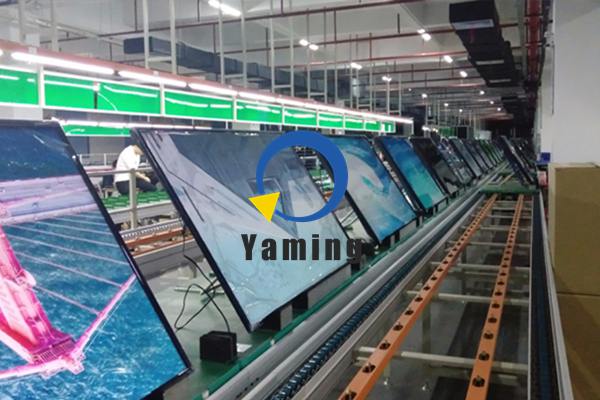
Measures for quality control of TV production lines
Refrigerator Quality Control: Core Goals, Implementation and Future Trends
Core goal: In the fierce market competition, through scientific and systematic quality control, improve product qualification rates, ensure performance and safety, and meet increasingly strict energy conservation and environmental protection standards, thereby enhancing brand competitiveness.
1. Core links and key technologies of quality control
Full process coverage
-
Incoming inspection: Strictly control the quality of raw materials and parts.
-
Process control: Monitor key processes such as assembly, welding, foaming, and refrigeration system filling (such as automatic metering of fluorine filling).
-
Finished product inspection: Conduct final inspection on the performance, safety and energy efficiency of the whole machine.
Key technology applications
-
Automation and intelligence: Adopt automatic inspection equipment, machine vision, and Internet of Things (IoT) technology to reduce human error and achieve real-time monitoring and defect identification, which can reduce the defect rate by about 20%.
-
Data-driven: Collect and analyze data (such as temperature, humidity, key parameters) through the production monitoring system to ensure product consistency and achieve early warning and rapid traceability of quality problems.
2. System construction that conforms to industry standards
-
Compliance with standards: Must comply with national standards (such as GB/T 8059 series product performance standards, energy efficiency rating standards) and international management systems (such as ISO 9001).
-
Systematic closed-loop management: Establish a closed-loop quality management for the entire process from design, procurement, production, inspection to after-sales, and ensure implementation through standardized work instructions and inspection specifications.
Benefit: A complete quality system can reduce product repair rate by more than 30%.
3. Future trend: integration of intelligence and green
-
Intelligent manufacturing: Utilize Industry 4.0 technology (big data, cloud monitoring) to optimize processes and achieve real-time optimization and predictive maintenance of quality control, which can increase production efficiency by approximately 25%.
-
Green production: The scope of quality control has been extended to include the selection of environmentally friendly materials (in compliance with RoHS and other directives), the improvement of energy efficiency, and the application of fluorine-free technologies to meet global environmental certification requirements.
4. Practical action recommendations
-
Lay a solid foundation: Strengthen incoming inspection and employee standardized operation training.
-
Technological transformation empowerment: Introduce automated testing and intelligent traceability systems.
-
Continuous optimization: Keep up with the upgrade of energy efficiency and environmental protection standards, and use data tools to continuously optimize quality control processes.
Conclusion: The quality control of refrigerators is a systematic project. Only by deeply integrating strict industry standards, core management and control throughout the process, intelligent technical tools and green development concepts can we build lasting competitiveness.
5 key measures for quality control of TV production lines
-
Raw material control: Implement strict factory inspections for core components such as LCD panels and circuit boards, and control quality from the source through supplier evaluation and traceability mechanisms.
-
Process and equipment standardization: Develop and implement standard operating procedures, introduce smart equipment and automatic testing systems, reduce human error, and ensure the consistency of the assembly process.
-
Real-time process monitoring: Deploy online inspection equipment at key production nodes to monitor size, welding, function and other parameters in real time, and link with the manufacturing execution system to achieve rapid response to exceptions.
-
Strict testing of finished products: Conduct comprehensive appearance, function and compatibility testing of finished products, and perform long-term aging testing to screen for potential defects and reduce early failure rates.
-
Data-driven improvement: Systematically analyze production line quality data, identify bottlenecks and trends, use big data prediction models, and achieve continuous quality improvement through PDCA cycles.
Core value: Through the above-mentioned full-chain closed-loop management, the defective rate can be significantly reduced, production efficiency and product reliability can be improved, and brand market competitiveness can be enhanced.
- Full cycle support from design to after-sales, please contact us via email: lixu2008@gmail.com