Email:yaming_best@outlook.com Telephone: + 86 137-3657-7326

The Treadmill Assembly Line cuts rework caused by loose parts!

The Treadmill Assembly Line cuts rework caused by loose parts!

2026-07-24

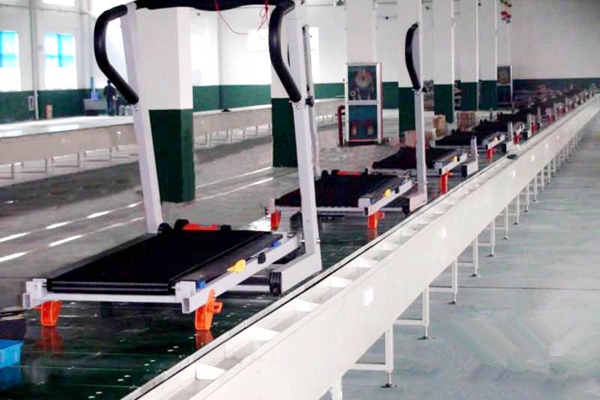
Introduction At the heart of modern manufacturing lies the assembly line, a system that transforms raw components into finished products through a meticulously orchestrated sequence of operations. Our company specializes in designing and building high-performance conveyor assembly lines tailored for the fitness equipment industry, with particular expertise in treadmill production systems. The image before you captures one of our flagship installations: a linear treadmill assembly line engineered for efficiency, precision, and scalability. Section 1: Assembly Line Architecture Conveyor System Design The conveyor system depicted in the photograph represents a modular belt conveyor assembly line, a configuration widely adopted across manufacturing sectors for its adaptability and reliability. The line features a continuous belt-driven platform constructed from heavy-duty aluminum framing, providing both structural rigidity and lightweight maneuverability. The conveyor belt itself is a multi-layer composite material, typically PVC or PU-coated, selected for its abrasion resistance, anti-static properties, and smooth surface finish that prevents damage to delicate components during transit. Workstation Configuration Running along the length of the line are precision-engineered workstations, each positioned at calculated intervals to correspond with specific assembly phases....
How to Optimize the Toilet Assembly Line to Improve the Finished Product Yield?

How to Optimize the Toilet Assembly Line to Improve the Finished Product Yield?

2026-07-04

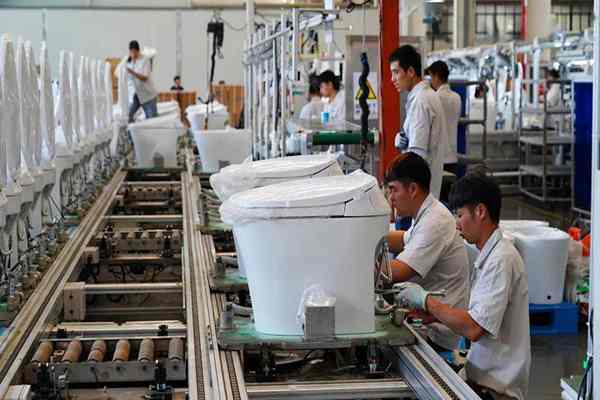
Smart Toilet Assembly Line: A Technical Overview of Modern Manufacturing 1. Overall Layout and Design Philosophy The image reveals a linear continuous‑flow assembly line purpose‑built for smart toilet production. The system is structured around a modular roller‑conveyor backbone that links individual assembly stations into an integrated whole. The line follows the one‑piece flow​ manufacturing principle—each unit moves sequentially between stations, eliminating the work‑in‑process (WIP) accumulation common in traditional batch production. The line features a symmetrical station arrangement on both sides of the conveyor, with operators positioned to face the line for optimal reach and minimal movement. This layout maximizes spatial efficiency while adhering to ergonomic standards. As visible in the image, ample buffer zones and tool racks are positioned within immediate reach of each station, enabling operators to complete material retrieval, assembly, and inspection without unnecessary motion. 2. Conveyor System: The Arterial Core At the heart of this line is an accumulating roller conveyor system. Close inspection shows track sections constructed from standardized aluminum extrusion profiles housing powered roller assemblies. The rollers feature wear‑resistant rubber coatings that provide consistent friction...

Teach you how to test the quality of the rice cooker assembly line!

Teach you how to test the quality of the rice cooker assembly line!

2026-06-14

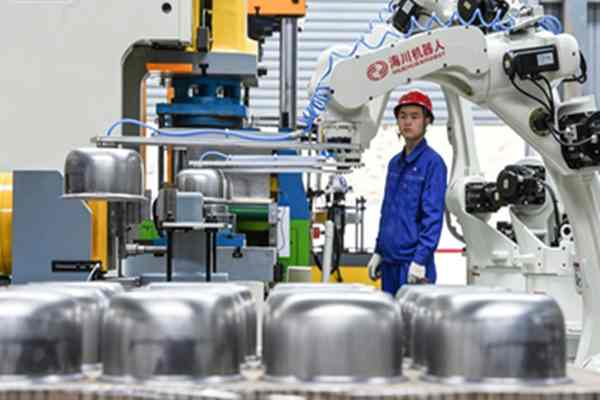
1. Overall Line Structure and Material Flow Layout The image shows an integrated automated processing and assembly line for rice cooker inner pots. It adopts a three-stage series layout: "front-end forming – mid-section processing – rear-end assembly." The line uses silver-gray metal inner pots as the core carriers, combining roller conveyor transport with robotic arm transfer to achieve precise transfer of workpieces between different process islands. The entire line’s material flow design follows the "single-piece flow" principle. The inner pot starts from raw material blanking, then passes through drawing, surface treatment, inspection and sorting, component assembly, and other processes, finally becoming the fully functional main body of the rice cooker. The positioning pallets visible on the ground feature special clamping grooves to ensure that each inner pot maintains a stable posture during transportation, avoiding bumps and scratches—crucial for subsequent spraying and assembly accuracy. 2. In-depth Analysis of Core Process Nodes Drawing and Forming Station The large yellow equipment on the left side of the image is a multi-station hydraulic drawing machine. It is responsible for forming round metal sheets into...

Automated door lock assembly line increases your production capacity by 300%

Automated door lock assembly line increases your production capacity by 300%

2026-05-24

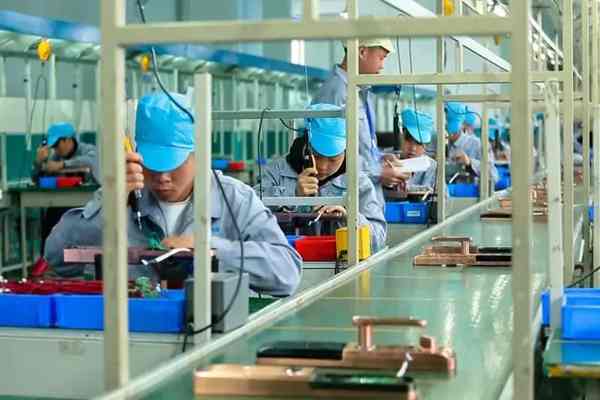
The image captures a door lock assembly line built around meticulous manual operations. Workers in uniform light-gray coveralls and blue anti-static caps focus intently within individually partitioned workstations. The line runs on a pale green anti-static conveyor belt, with copper-toned metal lock bodies arranged in orderly sequence along the track. The scene conveys a distinctive atmosphere—somewhere between laboratory rigor and factory rhythm—that reflects the dual pressures of millimeter-grade precision requirements and mass-production efficiency inherent to lock manufacturing. Error-Proofing Through Spatial Design The physical layout of a lock assembly line prioritizes foreign-object control and electrostatic discharge prevention. The transparent acrylic dividers visible in the image serve as more than simple partitions; they form physical error-proofing barriers. The tiny pins, springs, and cams inside a lock cylinder are extremely sensitive to dust, and these dividers effectively isolate operational debris between adjacent stations. Their transparent nature also allows line supervisors to conduct unobstructed visual patrols of the entire line, catching procedural anomalies in real time. Work surfaces are covered with green anti-static matting, with grounding systems ensuring PCB boards in electronic locks are...

Let's go to the fan assembly line to see how

Let's go to the fan assembly line to see how "wind" is spelled out!

2026-05-07

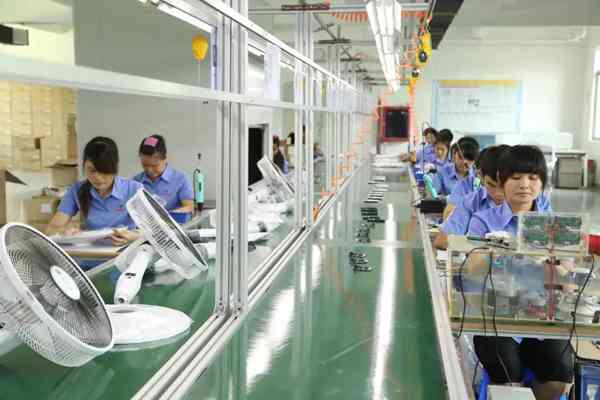
The image reveals a typical home appliance assembly production line, whose process design follows a distinctly different logic from large-scale equipment manufacturing. This fan assembly line demonstrates the production characteristics of "lightweight, modular, and high-efficiency" that define the small home appliance industry. Production Line Structure Analysis The image presents a dual-sided linear belt conveyor system, the mainstream configuration for small appliance assembly. The green anti-static PVC belt operates at constant speed, delivering fan bases to each workstation in sequence. The aluminum profile frame construction offers both lightweight properties and scalability—when products iterate or capacity adjustments are needed, workstation modules can be quickly added or removed without reconstructing the entire line. Workstation spacing design adheres to ergonomics principles of "within arm's reach." Operators work in seated positions, with material bins placed directly in front or to the side, keeping pickup and placement distances within 30 centimeters to minimize non-value-added motions. The integrated lighting and power bridge above the line provides independent task lighting and electric tool power interfaces for each workstation—this integrated design represents a signature feature of small appliance production...

Look! This is how we build an air sterilizer assembly line

Look! This is how we build an air sterilizer assembly line

2026-04-20

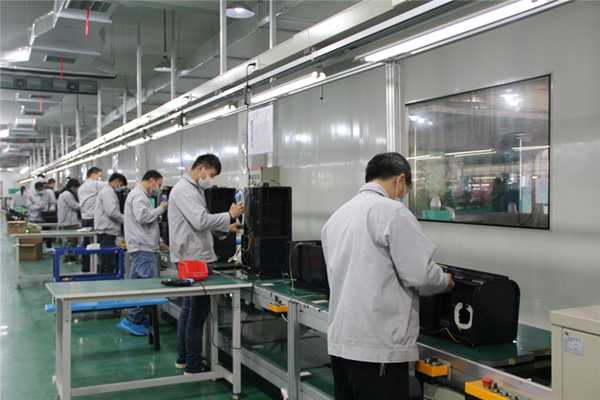
In the air sterilizer industry, the purification efficiency and service life of a product largely depend on the precision of production and manufacturing. Our assembly line adopts a modular layout and lean production concept. Through scientific process design, the transformation process of air disinfectors from parts to finished products is built into an efficient, accurate and controllable manufacturing chain. Production line layout: U-shaped assembly line design The entire production line adopts a U-shaped layout with a total length of 48 meters and is equipped with 12 standard workstations and 3 quality inspection stations. This design minimizes the material flow path, reduces the walking distance of workers by 40%, and facilitates management personnel to conduct quality monitoring throughout the process. The production line is equipped with an anti-static floor and a constant temperature and humidity system. The temperature is controlled at 22±2 ° C and the humidity is maintained at 45%-65%, providing a stable environment for the assembly of precision electronic components. Detailed explanation of the core process Section 1: Pre-assembly preparation (Stations 1-2) Production starts with a complete set of...

Answers to common questions from washing machine assembly line manufacturers, do you understand?

Answers to common questions from washing machine assembly line manufacturers, do you understand?

2026-03-25

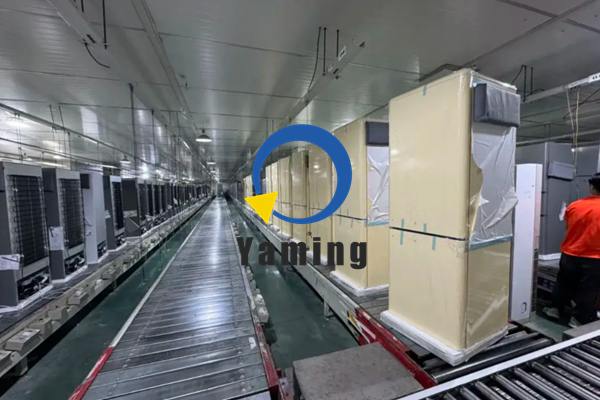
Refrigerator Quality Control: Core Goals, Implementation and Future Trends Core goal: In the fierce market competition, through scientific and systematic quality control, improve product qualification rates, ensure performance and safety, and meet increasingly strict energy conservation and environmental protection standards, thereby enhancing brand competitiveness. 1. Core links and key technologies of quality control Full process coverage Incoming inspection: Strictly control the quality of raw materials and parts. Process control: Monitor key processes such as assembly, welding, foaming, and refrigeration system filling (such as automatic metering of fluorine filling). Finished product inspection: Conduct final inspection on the performance, safety and energy efficiency of the whole machine. Key technology applications Automation and intelligence: Adopt automatic inspection equipment, machine vision, and Internet of Things (IoT) technology to reduce human error and achieve real-time monitoring and defect identification, which can reduce the defect rate by about 20%. Data-driven: Collect and analyze data (such as temperature, humidity, key parameters) through the production monitoring system to ensure product consistency and achieve early warning and rapid traceability of quality problems. 2. System construction that conforms to industry...

Quality control of refrigerator production lines: core points and industry standard framework

Quality control of refrigerator production lines: core points and industry standard framework

2026-03-09

Refrigerator Quality Control: Core Goals, Implementation and Future Trends Core goal: In the fierce market competition, through scientific and systematic quality control, improve product qualification rates, ensure performance and safety, and meet increasingly strict energy conservation and environmental protection standards, thereby enhancing brand competitiveness. 1. Core links and key technologies of quality control Full process coverage Incoming inspection: Strictly control the quality of raw materials and parts. Process control: Monitor key processes such as assembly, welding, foaming, and refrigeration system filling (such as automatic metering of fluorine filling). Finished product inspection: Conduct final inspection on the performance, safety and energy efficiency of the whole machine. Key technology applications Automation and intelligence: Adopt automatic inspection equipment, machine vision, and Internet of Things (IoT) technology to reduce human error and achieve real-time monitoring and defect identification, which can reduce the defect rate by about 20%. Data-driven: Collect and analyze data (such as temperature, humidity, key parameters) through the production monitoring system to ensure product consistency and achieve early warning and rapid traceability of quality problems. 2. System construction that conforms to industry...