
Look! This is how we build an air sterilizer assembly line
In the air sterilizer industry, the purification efficiency and service life of a product largely depend on the precision of production and manufacturing. Our assembly line adopts a modular layout and lean production concept. Through scientific process design, the transformation process of air disinfectors from parts to finished products is built into an efficient, accurate and controllable manufacturing chain.
Production line layout: U-shaped assembly line design
The entire production line adopts a U-shaped layout with a total length of 48 meters and is equipped with 12 standard workstations and 3 quality inspection stations. This design minimizes the material flow path, reduces the walking distance of workers by 40%, and facilitates management personnel to conduct quality monitoring throughout the process. The production line is equipped with an anti-static floor and a constant temperature and humidity system. The temperature is controlled at 22±2 ° C and the humidity is maintained at 45%-65%, providing a stable environment for the assembly of precision electronic components.
Detailed explanation of the core process
Section 1: Pre-assembly preparation (Stations 1-2) Production starts with a complete set of parts. Each workstation is equipped with a smart material rack to achieve accurate material distribution through a scanning system. The technicians first pre-installed the fan components and corrected the dynamic balance of the DC brushless motor and the turbine wheel to ensure that the operating noise was less than 35 decibels. Subsequently, the primary filter frame was installed, and the frame was fixed using ultrasonic welding process to replace the traditional screw connection, which not only improved sealing but also reduced assembly man-hours. Section 2: Core module integration (Stations 3-6) This is the technical core of the entire production line. Station 3 is responsible for the assembly of the HEPA filter cabin. A laser rangefinder is used to ensure that the gap between the filter and the housing is controlled within 0.5mm to prevent leakage of unfiltered air. Station 4 installs the UV-C ultraviolet lamp module. The operator wears an anti-static bracelet, completes the lamp tube positioning and line connection in a closed dark box, and then conducts insulation resistance testing to ensure electrical safety. Station 5 focuses on the integration of the control system, loading electronic components such as PCB motherboards, air quality sensors, and WiFi modules into the main control box. Automatic screw locking equipment is used, and the torque accuracy is controlled at ±0.05N·m to avoid excessive tightening or loosening caused by manual operation. Station 6 completes the splicing of the air duct system, applies food-grade sealant at each interface, and conducts positive pressure test through an air tightness tester. If the pressure is maintained for 30 seconds, the pressure drop does not exceed 50Pa will be qualified. Section 3: Final assembly and commissioning (stations 7-9) The front module completes the integration of the whole machine here. Station 7 installs the pre-installed fan components, filter cabin, and ultraviolet module into the main chassis in turn, adopting a dual fastening structure with buckles and screws. Station 8 assembles the front panel and the touch screen, and the fit gap between the screen and the housing is inspected by a plug gauge to ensure uniformity. Station 9 completes the installation of power cords, casters, instructions and other accessories, and the weight of the whole machine is weighed and reviewed online. An alarm will be triggered when the error exceeds ±50g. Section 4: Inspection and aging (Stations 10-12) Finished products enter a strict verification process. Station 10 conducts electrical safety tests, including withstand voltage test (1500V/1 minute), ground resistance test (≤0.1Ω) and leakage current detection. Station 11 carries out functional tests and uses a standard aerosol generator to test the purification efficiency of the whole machine. The CADR value (clean air output ratio) must reach more than 95% of the nominal value. Station 12 performs aging tests, and each machine runs continuously for 4 hours. During this period, the stability of fan current, ultraviolet lamp intensity, and sensor readings are monitored, and the data is automatically uploaded to the MES system for filing.
quality control system
The assembly line implements the "three no principles": no acceptance of defective products, no manufacturing of defective products, and no outflow of defective products. Each workstation is equipped with quality access control, and key inspection points are equipped with automated testing equipment to reduce human determination errors. An FQC final inspection station is set at the end of the production line to conduct 100% full inspection of appearance, functions, and accessories to ensure that the factory pass rate is not less than 99.5%. Flexible manufacturing capabilities In order to adapt to changes in market demand, the production line has the ability to quickly change models. By replacing fixtures and adjusting process parameters, switching production of different models of products can be completed within 2 hours, with a minimum economic batch size as low as 50 units. This flexible design enables efficient delivery of small batches and multiple varieties of orders. From the precise pre-installation of parts and components, to the precise integration of core modules, to the strict verification of the complete machine, our assembly line is based on process and supported by data to transform the manufacturing process of air disinfectors into quantifiable and traceable systems engineering that can be optimized. The improvement of every process is a solemn commitment to product quality.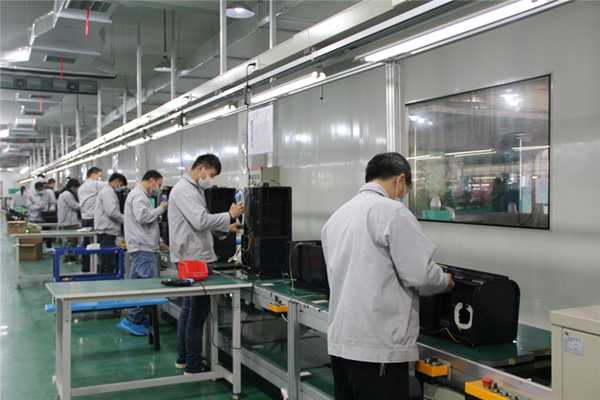
- Full cycle support from design to after-sales, please contact us via email: lixu2008@gmail.com